
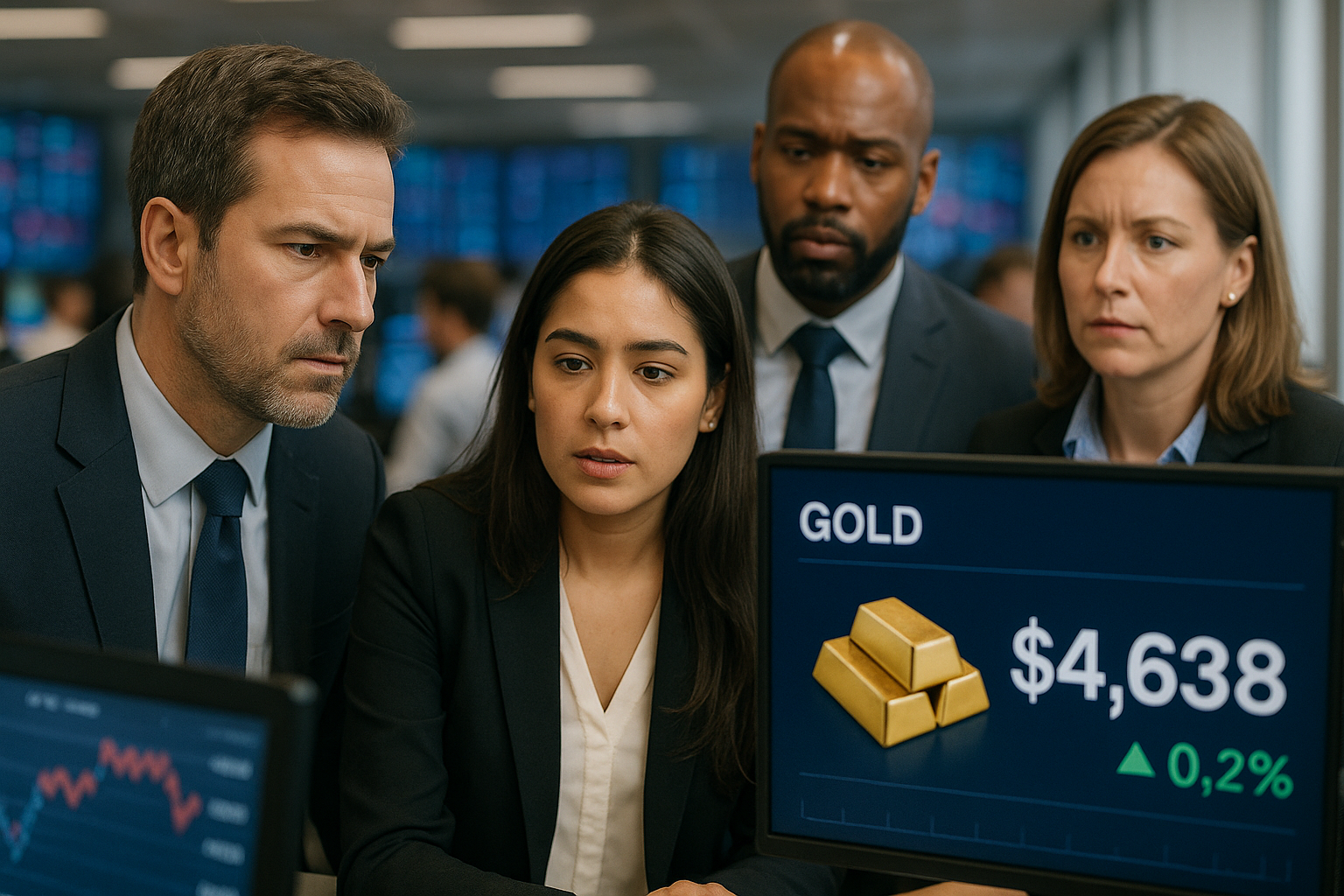
Gold staged a sharp recovery on Thursday, rising 2.02% to $4,637.95 per troy ounce after slipping to a one-month low earlier in the week. The bounce comes just two days after the World Bank published its April Commodity Markets Outlook, which warned that the historic rally in precious metals is approaching a cyclical ceiling in 2026.
A Volatile Week for Bullion
The recovery follows a midweek slump that pushed gold below $4,550 per ounce, the lowest level in a month. Selling was driven by surging energy prices after President Trump signaled opposition to an imminent nuclear deal with Iran, prolonging the suspension of Middle East energy exports and reigniting inflation concerns.
Silver has been hit harder. The metal slid to $69.08 per troy ounce on April 30, its lowest reading since March, after trading around $72 earlier in the week. Despite the pullback, silver remains 118.64% higher than a year ago, while gold is up 43.27% over the same period.
World Bank Sees Limited Upside
In its newly released Commodity Markets Outlook, the World Bank forecast that gold will average roughly $4,700 per ounce in 2026 and silver around $70, with both metals expected to decline approximately 7% in 2027. The report concluded that prices will be "constrained near current levels throughout 2026, with limited upside potential."
The Bank flagged three primary downside risks:
- Cooling speculative demand after a rapid build-up since early 2025
- Slowing central bank gold purchases
- Rising opportunity costs as elevated inflation keeps real yields firm
The report cautioned that any concentrated reversal—whether from profit-taking or a major institutional reallocation—could amplify the magnitude of a price retreat and trigger severe market volatility.
Inflation Pressures Cut Both Ways
Higher energy costs are a double-edged sword for bullion. On one hand, they reinforce the inflation hedge case that has powered gold's run from below $3,300 a year ago. On the other, they raise expectations that the Federal Reserve and other major central banks will keep policy rates higher for longer, increasing the opportunity cost of holding non-yielding assets.
That tension was visible in this week's price action. The same geopolitical headlines that lifted oil prices also weighed on metals as traders repriced the rate path, before bargain hunters stepped in on Thursday.
Upside Scenarios Remain
The World Bank noted that under its baseline, risks are tilted to the upside. If global trade frictions escalate or financial market volatility intensifies, safe-haven demand could again push gold and silver above current forecast ranges. With Middle East tensions unresolved and central bank policy in flux, the conditions that drove the rally remain in place even as the institutional consensus calls for a peak.
For now, the metals appear range-bound between competing forces: structural demand from central banks and reserve diversification on one side, and the gravitational pull of higher real rates on the other.
Sources: Fortune (April 28-30, 2026 daily price reports), Kitco News, World Bank Commodity Markets Outlook (April 2026), Trading Economics