
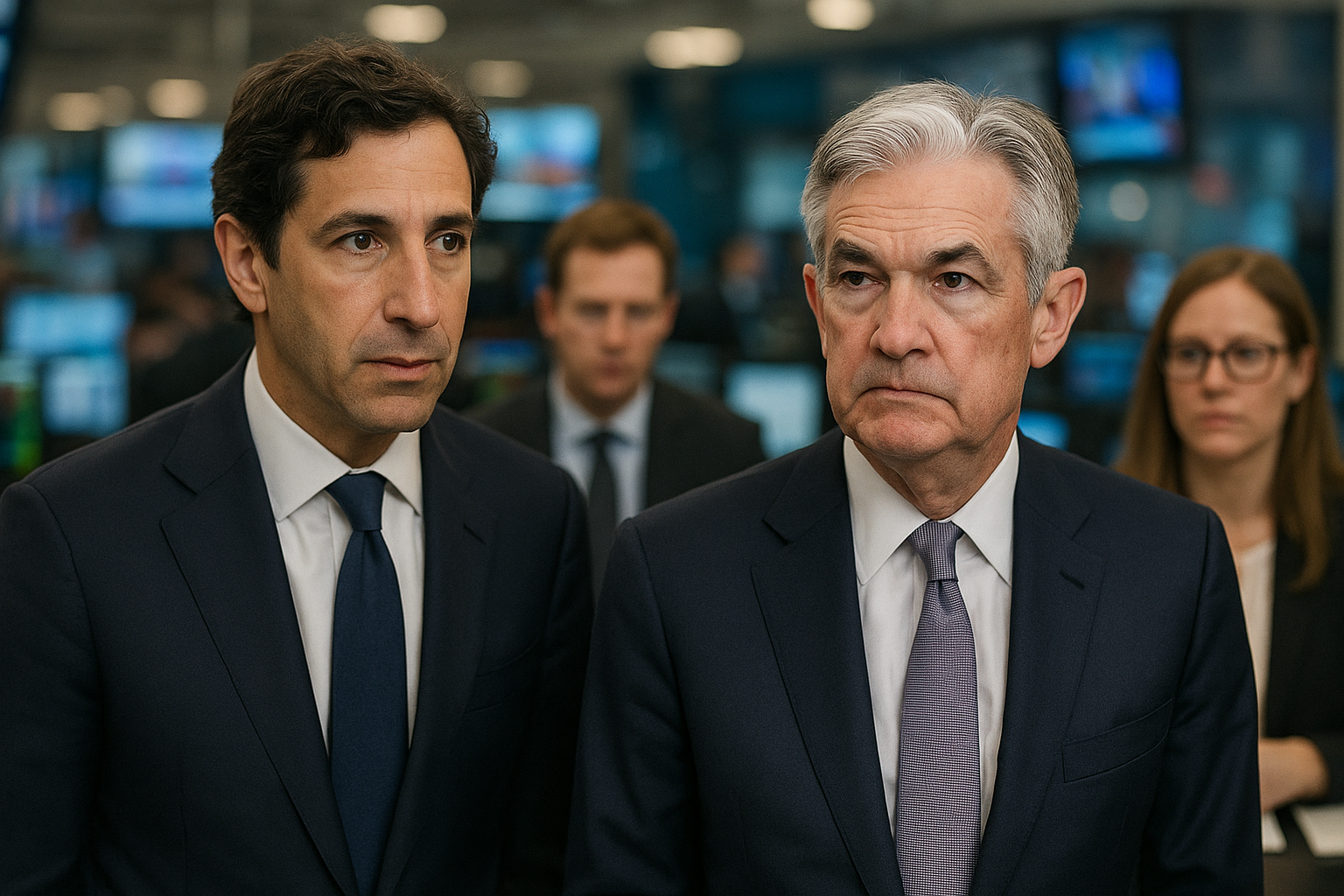
The Federal Reserve is eleven days from one of the most contested leadership handoffs in its modern history. Jerome Powell's term as chair expires May 15, and Kevin Warsh — President Donald Trump's nominee to succeed him — cleared the Senate Banking Committee on a 13-11 party-line vote, advancing to the full Senate for confirmation.
The transition arrives with the Fed already visibly fractured. At the April 29 meeting, the Federal Open Market Committee voted 8-4 to hold the federal funds rate steady at 3.50%–3.75%, the third consecutive pause. Governor Stephen Miran dissented in favor of a 25-basis-point cut, while three other members objected to the language of the policy statement itself. It was the first time since October 1992 that four FOMC officials broke from a single decision — a rare signal of how divided policymakers have become over the path forward.
Powell Stays — But Not in the Chair
In a development few on Wall Street anticipated, Powell announced he will remain on the Fed's Board of Governors after stepping down as chair, rather than retiring outright. His term as a governor does not expire until January 2028.
"I had long planned to be retiring," Powell told reporters after the April meeting, "but the things that have happened really in the last three months have, I think, left me no choice but to stay until I see them through."
Powell was referring to legal actions targeting him personally, which he said made an immediate exit untenable. His decision to stay preserves a veteran voice on the board even as Warsh — assuming confirmation — takes the gavel.
Who Is Kevin Warsh?
Warsh, 55, is no stranger to the institution. He served as a Fed governor from February 2006 to March 2011 after being nominated by President George W. Bush, and was deeply involved in the central bank's response to the 2008 financial crisis. Trump nominated him in late January, ending months of speculation that had also included National Economic Council director Kevin Hassett.
Warsh has historically leaned hawkish on inflation but has more recently argued the Fed has been too slow to recalibrate policy as conditions shifted. How that translates into action under a chair facing a fractious committee — and an oil-shock-driven inflation backdrop — is the question now consuming markets.
Markets Price In a Holding Pattern
Despite the political theater, traders have largely concluded that rate policy will not move soon regardless of who holds the gavel. J.P. Morgan Global Research expects the Fed to hold rates steady through the remainder of 2026, with the next move — likely a hike — not arriving until the third quarter of 2027. Fed funds futures show no priced-in cuts for the rest of this year.
That stasis reflects the bind policymakers face: persistent inflation pressure from elevated oil prices following renewed Strait of Hormuz tensions, set against a labor market that has begun to soften. Cutting risks reigniting price growth; hiking risks tipping employment.
What to Watch Before May 15
The full Senate vote on Warsh is expected in the coming days. Should confirmation slip past May 15, Vice Chair Philip Jefferson would assume the chair's responsibilities on an acting basis, per Federal Reserve Act provisions. The June FOMC meeting — the first under new leadership — looms as the first real test of how Warsh's policy instincts collide with a divided committee and a volatile macro environment.
For now, investors are watching not just the dot plot but the door.
Sources: CNBC, Fox Business, Al Jazeera, PBS NewsHour, CBS News