
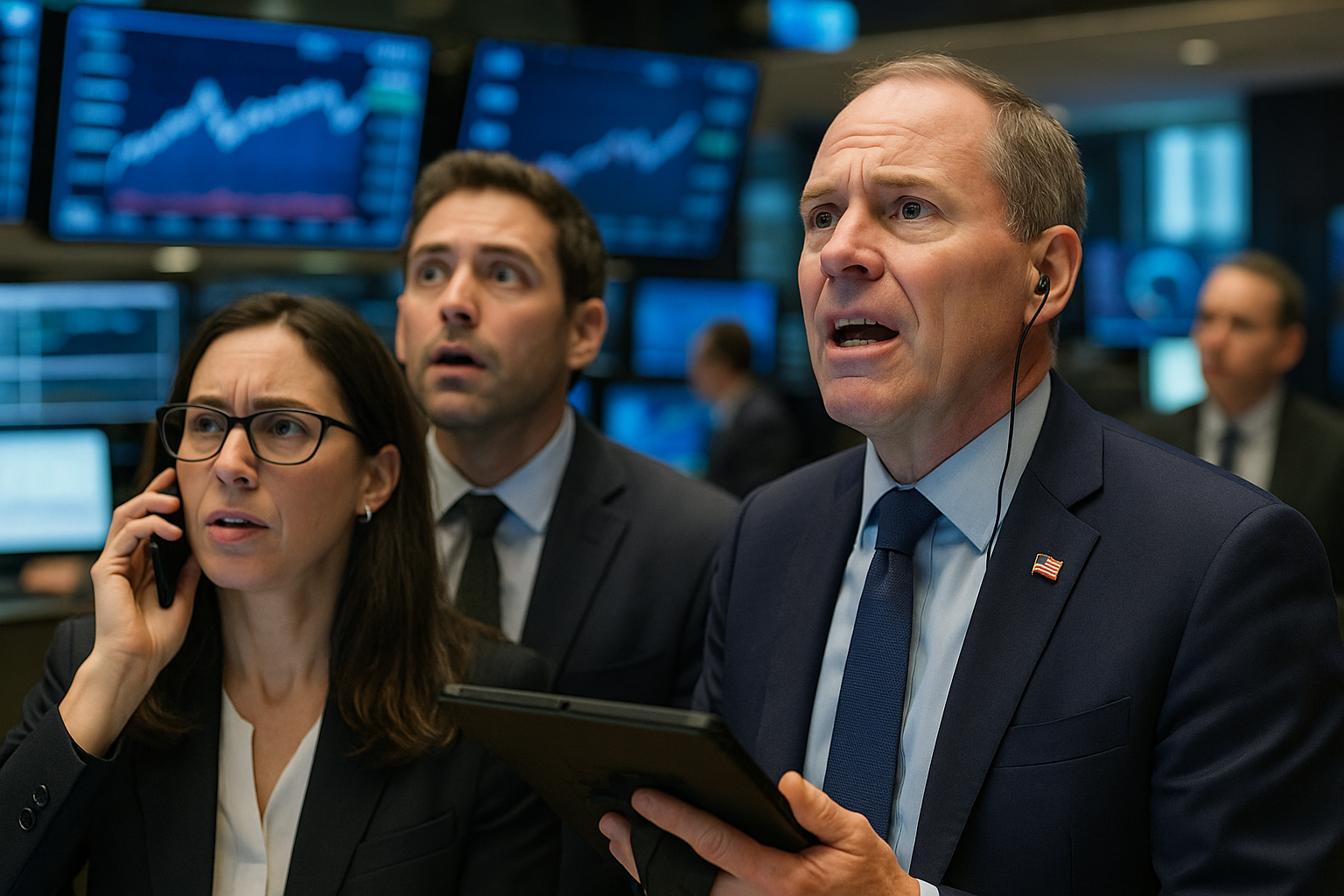
U.S. equities pushed deeper into record territory Thursday after a startling jobless claims report showed the labor market is still running hot, and as falling oil prices reinforced hopes that Washington and Tehran are closing in on a diplomatic deal. The Dow Jones Industrial Average crossed the 50,000 mark intraday for the first time since its February peak, while the S&P 500 inched 0.17% higher to a fresh record close of 7,377.72. The Nasdaq Composite advanced 0.53% to 25,976.76 as megacap technology names led the move.
Labor Market Stuns to the Upside
The headline shock came from the Department of Labor's weekly claims release. Initial jobless claims sank by 26,000 to 189,000 for the week ending April 25, well below the 215,000 economists had penciled in. That is the lowest reading since 1969, a half-century-plus benchmark that landed even as Meta and Nike have publicly outlined fresh rounds of layoffs.
Continuing claims, often viewed as a cleaner proxy for the unemployed pool, fell 23,000 to 1.785 million — the lowest in two years. The combination paints a picture of an economy where employers are reluctant to let workers go and where displaced employees are finding new jobs quickly.
"The data consolidates recent signals of a robust labor market," Trading Economics noted in its release commentary, after months in which Wall Street had been bracing for cracks in the hiring picture.
Oil Slides as Iran Talks Advance
Equity gains were amplified by another leg lower in crude oil. Brent slipped 3.61% to $97.61 a barrel after reports that the U.S. and Iran were nearing fresh diplomatic talks, extending a multi-day retracement from above $110. Easing energy costs lift the consumer-spending math at the same moment that hiring data is reaccelerating — an unusually friendly backdrop for risk assets.
Mega-cap technology and AI-linked names captured most of the upside. Microsoft rose 2.84%, Qualcomm surged 7.45%, and ServiceNow jumped more than 7% as buyers chased the AI infrastructure trade once again. Bitcoin, by contrast, retreated toward $82,000 as flows rotated back into traditional risk.
A Counterpoint From the Leading Indicators
Not every gauge is flashing green. The Conference Board's Leading Economic Index (LEI) fell 0.6% in March to 97.3, more than reversing February's 0.3% gain. The decline was driven by softer building permits, weaker consumer expectations, and a pullback in stock prices that has since been undone.
Crucially, the Conference Board trimmed its 2026 U.S. GDP forecast to 1.6% year-over-year, well under 2%, citing a labor market that "may soften with hiring slowing and unemployment edging higher" later in the year. The next LEI release is scheduled for May 22.
That tension — record-low jobless filings now versus a leading index that still points to deceleration — is the central debate facing markets as Powell prepares to hand the gavel to Kevin Warsh on May 15. For now, traders are siding firmly with the live data.
What to Watch Next
- May 12 CPI: With Cleveland Fed nowcasts running near 3.56%, an in-line print would likely keep the Fed in pause mode through summer.
- Iran framework: Any formal announcement of a U.S.-Iran agreement would extend the oil-down, stocks-up trade.
- Earnings tail: Late-cycle reports from retail and travel names will test whether the consumer is keeping pace with the labor data.
Sources: CNBC, TheStreet, Trading Economics, Conference Board, Sunday Guardian Live, U.S. Department of Labor